
AI Can Generate Design. But It Can’t Direct Meaning.
There’s a growing assumption in creative industries that AI is beginning to replace designers.
And on the surface, it’s easy to understand why.
AI can now generate logos, layouts, illustrations, ad concepts, animations, brand systems, and polished visual compositions in seconds – even websites. What once took weeks (or months) can now happen almost instantly.
Some of the outputs are genuinely impressive.
But the conversation often misses something important:
Most experienced designers aren’t worried about AI replacing them because the real value of design was never just production.
It was direction.
Especially in industries like real estate development and master-planned community marketing, where design isn’t simply meant to look attractive. It’s meant to communicate something deeper:
- a lifestyle
- a pace of life
- a personality
- an aspiration
- a feeling someone wants to step into
That level of communication has always required human interpretation, judgment, and emotional understanding.
And it still does.

For A+B1, Design Is About Communication, Not Decoration
The easiest way to misunderstand design is to think of it as visual styling.
Colors. Fonts. Layouts. Graphics.
Those things matter, of course. But they’re not the purpose of design. They’re the language of it.
The real role of design is to communicate meaning.
A thoughtfully designed brand or website should begin telling a story before someone consciously reads a single sentence. The pacing of a layout, the restraint of typography, the scale of imagery, the amount of whitespace, the sequencing of information—these things shape emotional perception almost immediately.
A community can feel elevated, grounded, adventurous, youthful, luxurious, or nostalgic before a homebuyer even realizes why.
That isn’t accidental.
And it’s not something AI independently understands.
AI can identify patterns associated with successful design. It can imitate aesthetics and reproduce styles that people historically respond to. But it doesn’t actually know why a particular direction feels trustworthy, calming, premium, or emotionally compelling.
It only knows that previous users responded positively to something similar.
That’s a massive distinction.
Because design decisions are rarely made on aesthetics alone. They’re made on emotional alignment.
AI Can Create. But It Still Needs Direction.
One of the most important distinctions in this conversation is the difference between generating visuals and directing creative intent.
At A+B1, our designers are not using AI to conceptualize brand philosophies or invent emotional positioning from scratch. Those things still come from experience, collaboration, strategic thinking, and an understanding of human behavior.
What AI is doing is helping remove the technical friction that traditionally slows creative teams down.
And that’s where it becomes incredibly valuable.
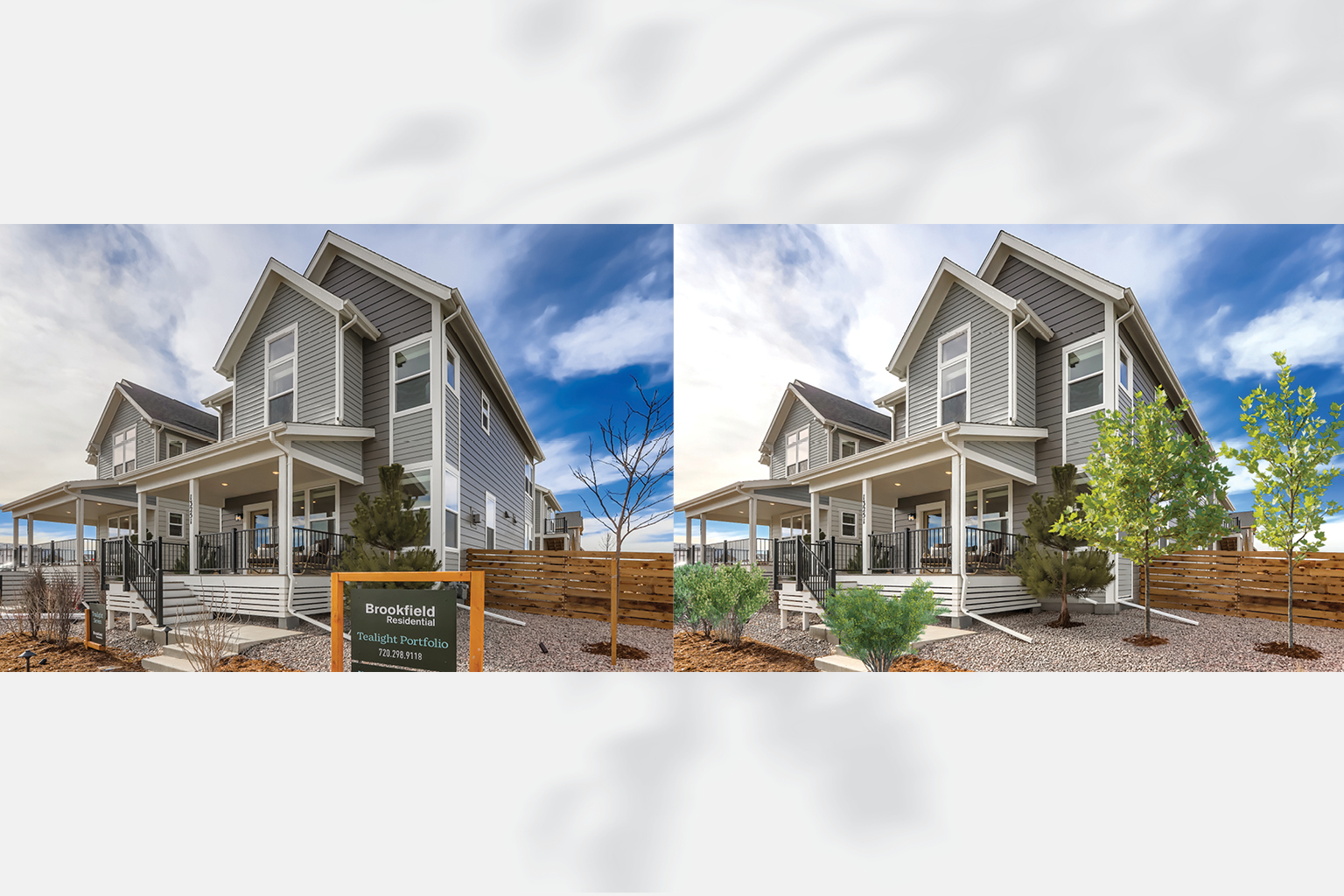
Instead of spending hours extending a photo to fit multiple marketing formats, cleaning up landscaping in an image, removing distracting elements, or adjusting environmental conditions, our team can now move much faster through those production tasks.
That doesn’t replace the designer.
It gives the designer more room to focus on the thinking.
More time spent refining emotional tone.
More time spent shaping the experience.
More time spent ensuring the work actually communicates what it’s supposed to communicate.
In many ways, the best creative professionals are becoming more effective because of AI—not less necessary.
The Real Estate Reality
This becomes especially relevant in the world of new home communities, where speed-to-market matters constantly.
If a builder has a home available now, there’s pressure to market it quickly and effectively before the community next door captures attention first.
But there’s also a balancing act between authenticity and aspiration.
Sometimes the right move is authenticity.
An iPhone photo of a real home on a real day can feel honest, approachable, and immediate. That kind of realism matters in modern marketing because audiences are increasingly skeptical of imagery that feels overly polished or artificial.
Other times, the opportunity is to elevate what already exists.
Maybe the landscaping hasn’t matured yet. Maybe the grass is dormant. Maybe there’s a dead tree in the foreground or construction elements nearby that distract from the experience being communicated.
In the past, teams either had to work around those limitations or spend significant time and budget manually editing imagery.
Now, AI allows for flexibility.
A real, on-site photograph can be thoughtfully enhanced:
- grass can look healthier
- landscaping can feel more complete
- environmental distractions can be cleaned up
- imagery can be adapted efficiently across multiple channels and formats
Not to fabricate reality, but to better communicate the intended experience.
That’s a very different use of AI than replacing creativity altogether.
It’s production support in service of a larger strategic vision.
The Risk of Sameness
Ironically, one of AI’s greatest strengths may also become one of its greatest limitations.
AI is exceptional at optimization.
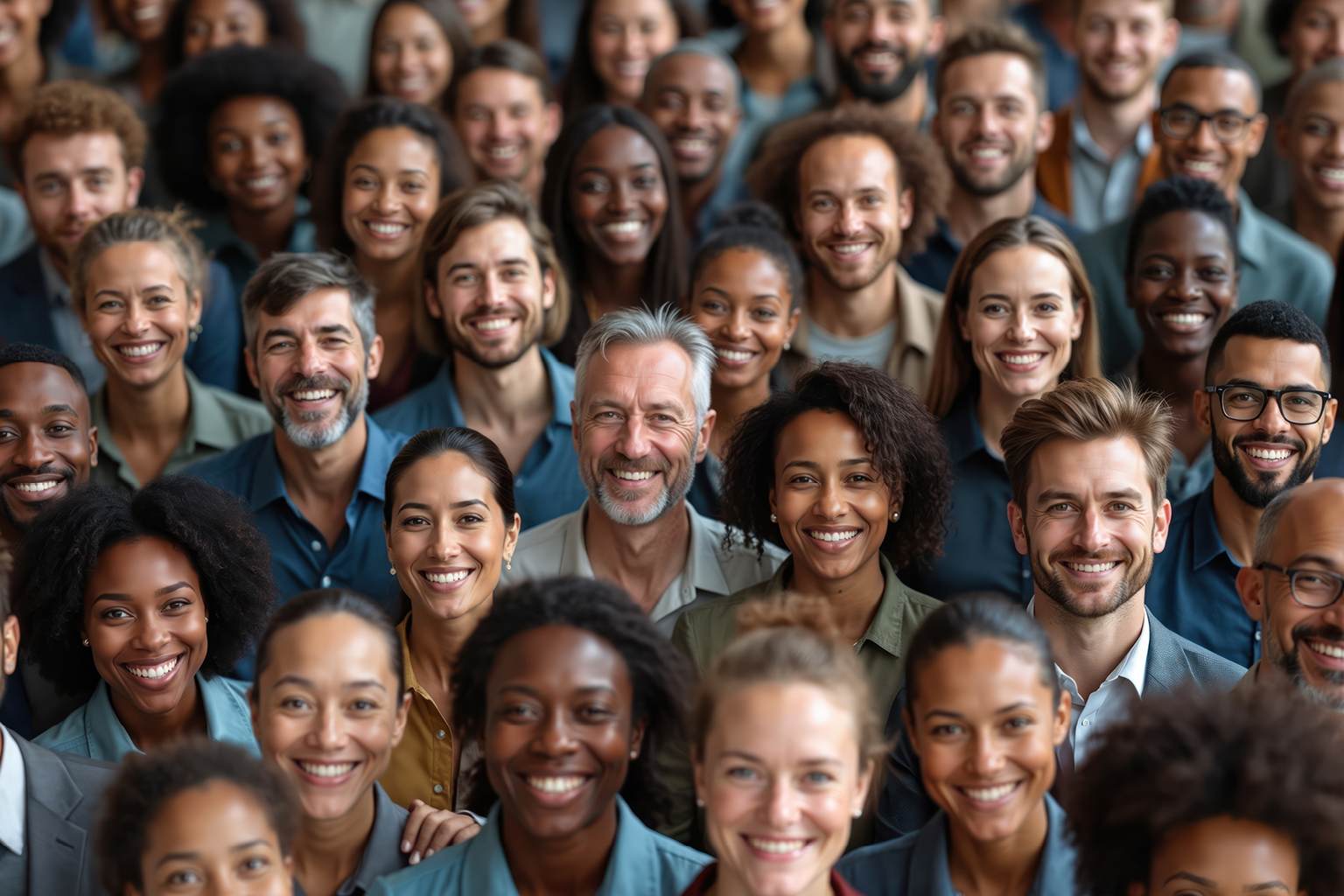
It smooths edges. It balances layouts. It follows trends. It generates work that looks polished, contemporary, and technically correct.
But when everyone has access to the same systems trained on the same visual patterns, a different problem begins to emerge:
Sameness.
We’re already starting to see it across branding, social media, websites, and digital advertising.
The work becomes increasingly refined—but increasingly interchangeable.
The same visual pacing.
The same glossy confidence.
The same hyper-polished aesthetic language.
And interestingly, audiences are beginning to push back against that.
Especially younger generations who increasingly gravitate toward brands, experiences, and visuals that feel more analog, tactile, restrained, and human.
Not because they dislike technology.
But because overly perfected design can begin to feel performative – or worse, untrustworthy.
People are craving signs that something was actually considered by another person.
Texture. Warmth. Imperfection. Restraint. Personality.
Things that feel intentional instead of infinitely generated.
The Human Role Moving Forward
As AI becomes more integrated into creative workflows, the role of designers will continue to evolve.
But the value of human creative direction is only becoming more important.
Because AI doesn’t know when something feels emotionally flat.
It doesn’t recognize when a visual direction lacks authenticity. It doesn’t understand cultural nuance, emotional timing, restraint, or the subtle difference between something that looks impressive and something that genuinely resonates.
It still requires human approval. Human instinct. Human perspective.
AI can assist in generating outputs.
But it still takes people to determine whether the work means anything.
If you haven’t already, bounce around our Portfolio to see true, human-driven work that isn’t compromised or plagued by “sameness.”