Marketing Budget Planning for 2027: What Homebuilders and Developers Can’t Afford to Leave Out of the Plan
Key Takeaways
- Spend where buyers are. Prioritize high-intent platforms and give every supporting channel a clear job.
- Let customers make the case. Authentic testimonials and video build trust that marketing claims alone cannot.
- Keep creative dollars flexible. Incentives, inventory and corporate priorities will change, often with little notice.
- Work the audience you already have. Surveys, segmentation and thoughtful follow-up can turn existing relationships into sharper insights and stronger demand.
- Make the experience match the promise. The arrival, sales environment and follow-up matter as much as the campaign.
- Budget for what is changing. Protect search fundamentals while reserving room to test new media, AI visibility and emerging tools.
Let’s get into home builders’ and community developers’ real estate marketing budget for next year because it’s budget season. And every budget season begins with a version of the same question: What do we need to keep doing next year?
It is an understandable place to start. But in a housing market that continues to change by the week, it is no longer the most useful question.
The better question is: How can we remain flexible for what marketing must be prepared to do next year?
For homebuilders and community developers, the answer extends well beyond maintaining a website, producing a campaign and renewing the media plan. Marketing has to reach active buyers efficiently, create desire in a price-sensitive market, build trust over a longer decision cycle and respond quickly when incentives, inventory or corporate direction changes.
That does not require spending everywhere. It requires protecting the investments that will matter most while leaving enough flexibility to act when the market does something no annual plan could predict.
As 2027 budgets take shape, these are the areas we believe homebuilders and developers cannot afford to leave out.
A smarter digital media presence
“More media” is not a strategy. Neither is dividing the budget among every available channel in the name of being everywhere.
The strongest media plans begin by defining where the most valuable audiences are, what stage of the home search they are in and what it will take to move them forward. That often means balancing broad awareness with a strong presence where active buyers are already shopping.
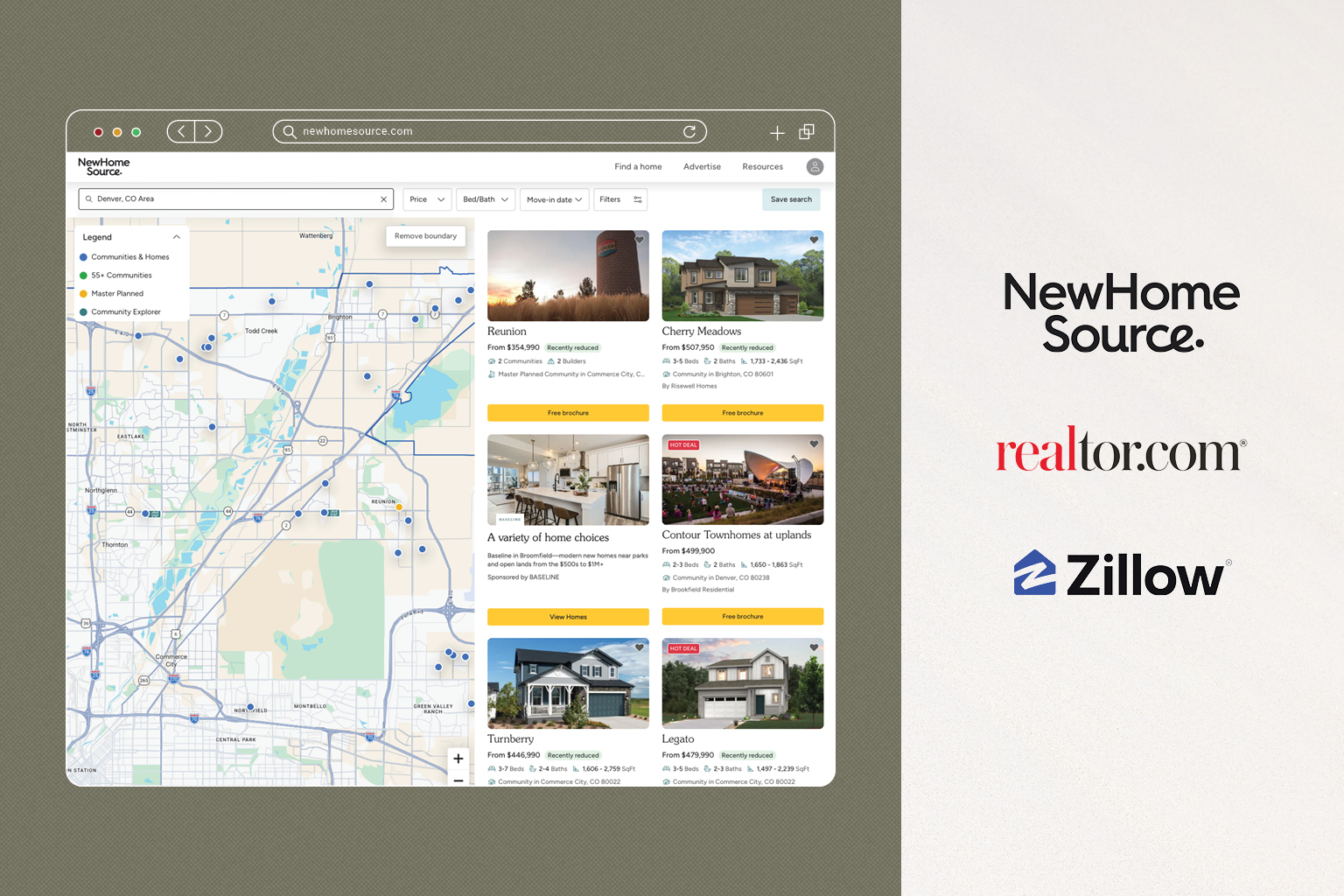
Platforms such as Zillow, Realtor.com and NewHomeSource can be tremendously important because they place new homes and communities directly in the path of high-intent prospects.
But even among active buyers, the same channel mix will not serve every community, price point or sales objective. A luxury neighborhood, a first-time buyer product and a large-scale master-planned community should not inherit the same media plan simply because it performed somewhere else.
Search, paid social, programmatic display and retargeting may still form the core of the plan. Connected TV, streaming video, digital audio, geofencing and select out-of-home placements can create additional reach and richer storytelling. Cost-effective, Realtor-only email programs can help activate an influential audience without requiring a major campaign investment.
The point is not to fund all of it, all of the time. The point is to understand the job of each channel, invest where it makes most sense for your objectives, and push ad creative and messaging that performs in those specific environments – not something that will perform everywhere.
And within nearly every channel, video deserves a larger role.
Buyers are surrounded by polished renderings, perfect photography and familiar promises.
What often earns their attention now is something more human: a homeowner describing why they moved, a sales counselor walking through a favorite feature, a resident showing what Saturday morning looks like in the community or a builder explaining a process in plain language.
Budgets should account for both higher-production brand video and a steady stream of authentic, platform-native content.
The latter does not need to look expensive. It does need to feel intentional, credible and real.
More proof. Fewer promises.
Buying a new home requires buyers to trust the builder, the community vision, the sales process, the construction experience and, in many cases, a lifestyle that is still coming to life. Every claim made by the brand is filtered through that uncertainty. And that’s a big ask of a brand.
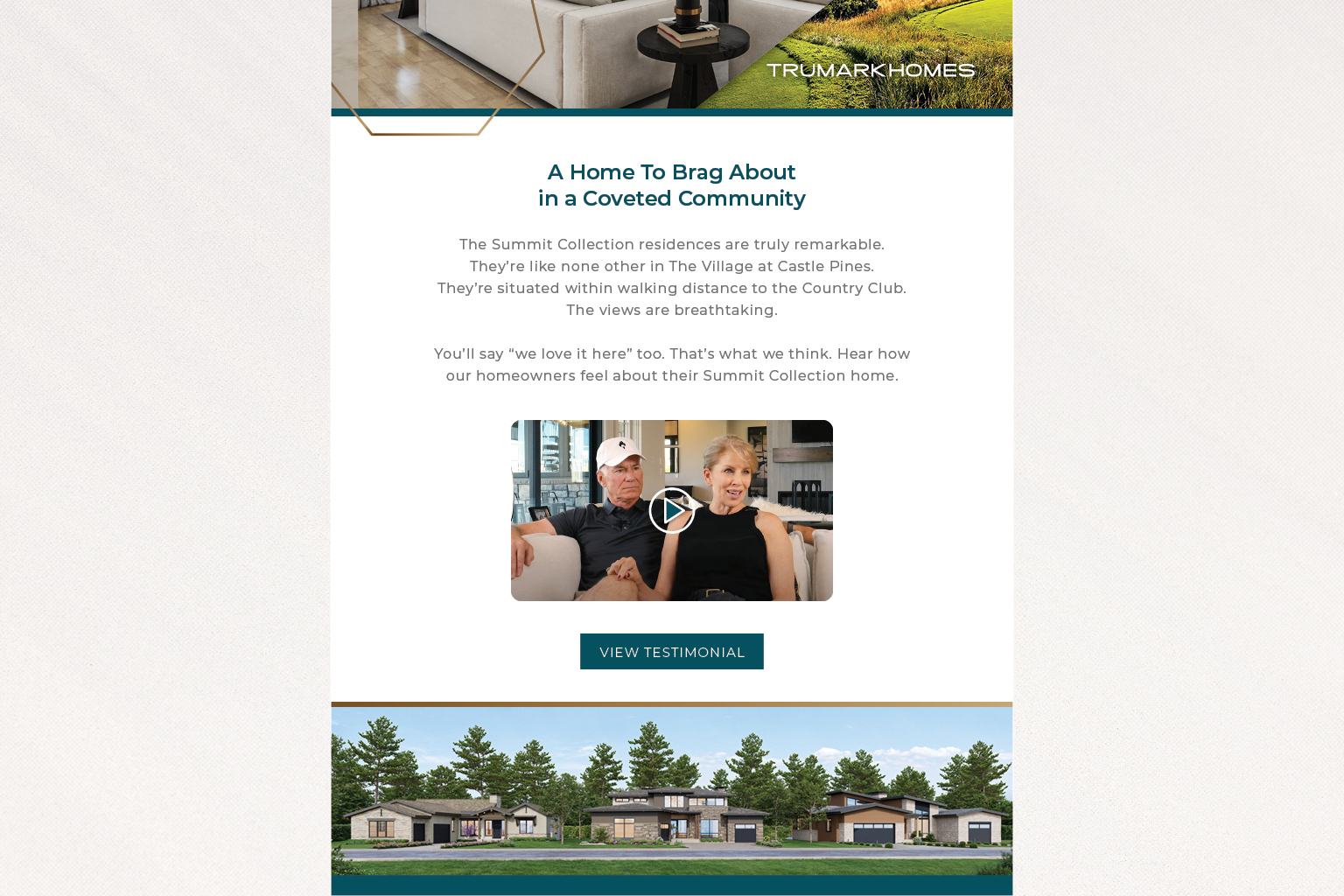
Testimonials help close the distance between what marketing says and what buyers are willing to believe.
But testimonial marketing should be more ambitious than collecting a handful of five-star quotes or producing one homeowner video each year. Builders and developers should create an ongoing system for identifying, capturing and distributing real customer experiences.
That can include:
- Professionally produced homeowner stories
- Short-form resident and buyer videos
- Written profiles and Q&As
- Reviews organized around specific parts of the experience
- Community stories centered on belonging, amenities and daily life
- Sales and construction testimonials that answer common objections
- Dedicated testimonial pages that can be searched, shared and referenced
Written content is especially important. Video may make the experience emotional, but a well-structured written profile gives search engines and AI platforms clear, indexable evidence of what real customers say about the builder or community. It also lets one story live across the website, email, social media, paid advertising and the sales process.
The strongest testimonial does not simply say, “We love our home.” It helps a prospective buyer see someone like themselves making the decision, navigating the uncertainty and feeling good about the outcome.
Creative flexibility in an incentive-driven market
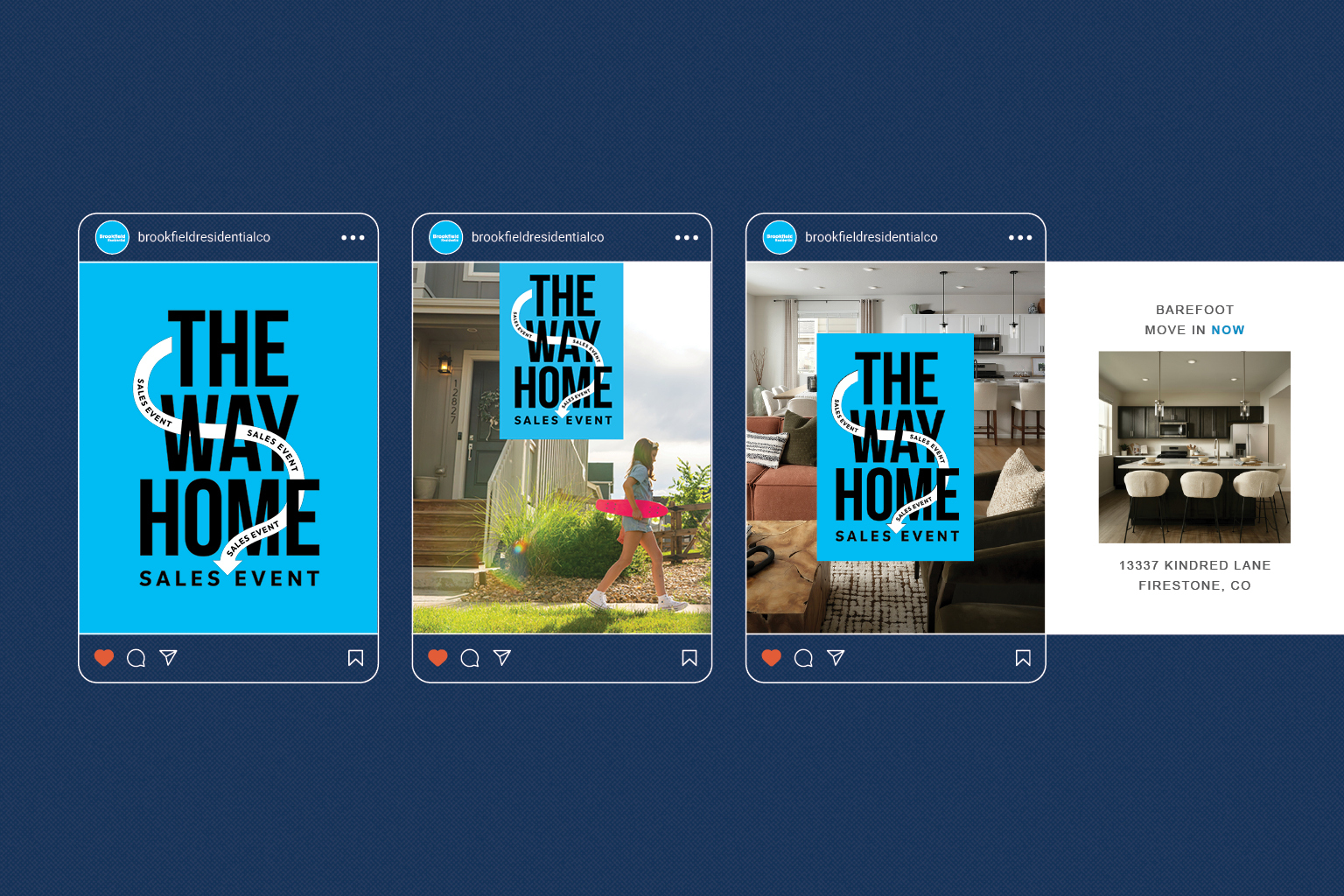
Interest rates may move. Standing inventory may change. Corporate promotions may arrive with little notice. One neighborhood may need traffic while another needs to protect pricing. A national builder may introduce an incentive that must be adapted for a local division, audience and competitive set.
If every creative dollar is committed to a fixed calendar before the year begins, the marketing team will spend the year choosing between speed and quality.
Budgets should include a clearly defined allocation for responsive campaign development: new incentive creative, offer changes, inventory-specific messaging, division needs and unexpected sales priorities.
That means accounting for concepting, copy, design, animation, landing pages, email, digital advertising and updates across the customer journey. Which is oftentimes more than (and should be) merely swapping a rate on an existing graphic.
The need to remain nimble does not mean every promotion should look temporary. In fact, a highly promotional market makes brand discipline more important. Incentives should create urgency without reducing the home to a commodity or making the brand feel perpetually on sale.
Marketing has to be ready to move quickly while still protecting what the builder or community stands for.
More value from the audience you already have
The next useful insight may already be sitting in the CRM, the resident database or the sales center.
Most builders and developers invest heavily in acquiring new leads. Fewer put the same energy into learning from the prospects, buyers, Realtors and residents they have already earned access to.
Surveys are one of the simplest opportunities. A well-designed survey can reveal why buyers selected a community, which competitors they considered, what delayed their decision, which messages mattered and where the experience failed to meet expectations. Offering a thoughtful incentive or prize can increase participation and signal that the feedback has real value.
The same approach can extend beyond email.
QR codes in sales offices, models, welcome materials and community events can create easy opportunities to capture feedback, preferences or future interest.
Short polls can help distinguish casual engagement from meaningful buyer intent. Resident input can inform future amenities, programming, content and referral efforts.
The value is not merely “more data.” It is better decisions.
At the same time, email cannot be treated as an occasional announcement channel. Strong nurture programs, segmented follow-up and strategically timed drip campaigns are increasingly important as buyers take longer to decide.
Text marketing can play an effective role too – particularly around appointments, releases, events, inventory and time-sensitive opportunities – when the message is useful, well-timed and permission-based.
The goal is to create a connected communication system that responds to what people have shown interest in, rather than sending everyone the same message and hoping it lands.
An on-site experience worthy of the promise
Marketing does not end when the buyer arrives. That is where the claims begin to be tested.
As we explored in If You’re Not Selling Luxury Experiences, You’re Not Selling, luxury is no longer defined only by price. It is expressed through thoughtfulness, ease, confidence and the feeling that the experience has been designed around the customer.
That expectation applies well beyond traditionally luxury homes.
A buyer may discover a community through a cinematic video, refined campaign or beautifully designed website. If the drive is confusing, the signage is dated, the sales environment feels generic or the follow-up is impersonal, the story falls apart at the moment it matters most.
Budget planning should therefore account for the full physical and interpersonal experience:
- Community arrival and wayfinding
- Sales-gallery and model presentation
- Printed and digital sales materials
- Interactive maps and community storytelling
- Events and broker experiences
- Appointment preparation and post-visit follow-up
- Builder alignment within master-planned communities
- Small hospitality details that make the visit feel considered
- These are not separate from marketing. They are where marketing becomes believable.
- Search visibility for the way buyers research now
Traditional SEO remains essential, but search behavior is becoming more conversational, fragmented and answer-driven. Buyers are asking increasingly specific questions across Google, AI platforms, social media, maps and real estate marketplaces (often long before they complete a registration form).
That means 2027 budgets should protect the fundamentals while expanding what “search visibility” includes.
Websites need clear, useful information with FAQs that should answer the questions buyers actually ask. Community comparisons, local expertise, customer stories and educational content should help establish the brand as a credible source.
The objective is larger than ranking for a familiar phrase. It is making the builder or community easy to understand, easy to verify and more likely to be a consideration wherever research begins.
Budget for readiness, not repetition
The strongest 2027 marketing plans will not be the ones with the longest list of tactics. They will be the ones built around the realities of the market.
Reach active buyers where they are already looking. Use video and real customer voices to make the story more credible. Prepare for incentives and inventory to change. Learn more from the audiences you already have. Make the on-site experience as considered as the campaign that brought people there. Strengthen visibility wherever buyers research. And protect enough budget to test what comes next.
The question is not simply what marketing cost this year. It is what marketing must be ready to accomplish next year.
That is the budget worth building.
A+B1 helps homebuilders and community developers connect annual strategy, brand, creative, content, media and the buyer experience. If your 2027 planning is underway, now is the time to make sure the investments that matter most are part of the plan. Get in touch with us today. We look forward to sharing our expertise.