
Incentives Create Urgency. Brand Creates Desire.
When a buyer’s logical response is “it’s too expensive,” the answer isn’t always a better offer. It’s a more compelling reason to want the home.
Let’s begin with the reality no amount of clever marketing can erase: the new home marketplace is more expensive than ever. We’re experiencing a pernicious mixture of rising build costs coupled with high interest rates and rising costs of living.
We are in a market that refuses to feel predictable.
Which is why the market is awash in rate buydowns, closing-cost assistance, flex cash, design credits, included upgrades and price reductions. Just published, the number of builders cutting prices increased to 43% in October, while the use of sales incentives continued to rise from 60% to 65% of builders nationwide, according to the National Association of Home Builders.
These offers matter. In many cases, they are the very thing that makes purchasing a home financially possible. But possible is not the same as desirable.
An incentive can help a buyer qualify. It can lower the monthly payment. It can create a reason to act now rather than later. What it cannot do (at least not on its own) is make someone fall in love with a home.
That is the challenge facing new-home marketing today, and where builders and communities should focus their attention in 2027.
Affordability Is a Barrier. Sameness Is a Bigger Problem.
Spend a few minutes looking at home builder advertising and the offers begin to blur together.
Special financing. Limited-time savings. More buying power. Thousands toward closing costs. Act now. Don’t wait. This weekend only.
Different builders. Different numbers. Nearly identical messages.
The incentive may be competitive, but the marketing is often interchangeable.
When every campaign is built around the deal, buyers are trained to compare builders on the deal alone. The home becomes a commodity. The community becomes secondary. The brand becomes little more than a logo sitting above a mortgage rate.
And if price is the only meaningful difference a builder presents, price will become the buyer’s most meaningful consideration.
That is a dangerous competition to create.
There will almost always be another builder willing to offer more for less, reduce something further or introduce a new promotion next month. Chasing that cycle may generate traffic, but it does little to build preference. It gives buyers a reason to shop without giving them a reason to choose.
The goal cannot simply be to make the home cost less. The goal is to make the home mean more.

Give Buyers Two Reasons to Move.
Incentives are not the enemy of emotional marketing. In today’s market, they are often essential to it.
But their role must be understood.
The incentive answers: Why should I buy now?
The brand answers: Why do I want this home?
One creates urgency. The other creates preference.
One makes the purchase easier to justify. The other makes it feel difficult to walk away from.
The strongest new-home campaigns do not choose between the rational and the emotional. They connect them. They acknowledge the financial weight of the decision while continually reinforcing what makes the decision worth considering in the first place.
Because “it’s too expensive” is a perfectly logical reason to say no.
Marketing cannot (and should not) convince buyers to disregard that reality.
But it can demonstrate that this is not simply another expensive house. It is the kitchen where everyone gathers. The community where the kids grow up. The trail walked every morning. The first home that finally feels personal. The next version of life the buyer has been working toward.
The incentive may help make that life attainable. Desire is what makes it worth attaining.
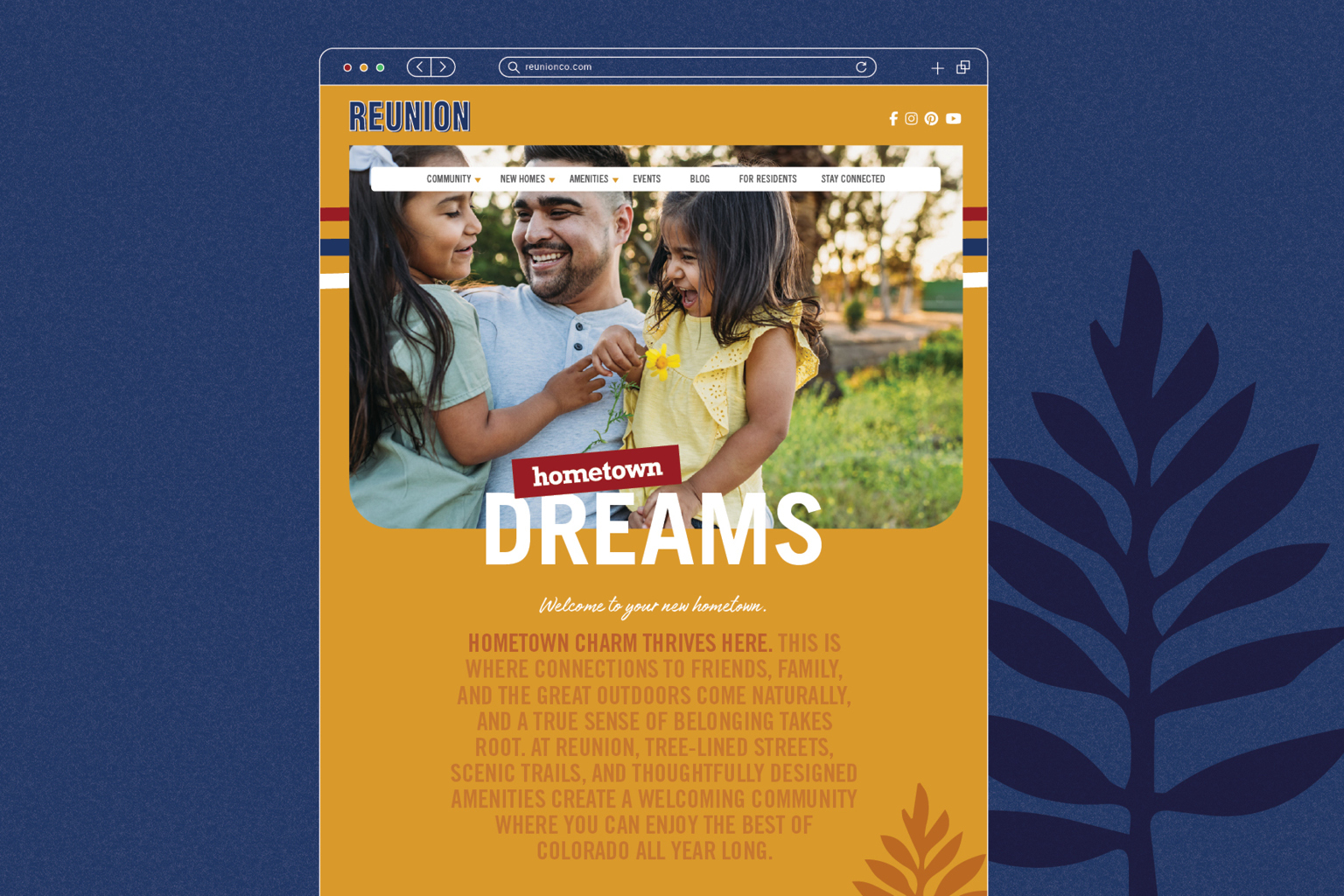
Desire Requires Specificity.
The phrase “dream home” has been used so often that it no longer asks anyone to dream.
The same is true of “more space,” “lasting memories,” “exceptional lifestyle” and nearly every other broad promise that appears throughout the category.
Emotional marketing does not mean using more emotional words. It means understanding the buyer’s life with enough specificity to reveal a feeling they recognize.
Maybe the appeal is watching children walk to school alongside neighborhood friends. Maybe it is finally having a dining room large enough to host the holidays instead of rotating between relatives’ homes.
Maybe it is moving closer to the trails, golf course, restaurants or open space that will actually shape daily life. Maybe it is a low-maintenance home that replaces weekends spent on upkeep with weekends spent elsewhere.
Maybe it is the pride of owning something beautifully designed – and the feeling that the home reflects who the buyer has become.
These details create recognition. Recognition creates relevance. And relevance is what separates true emotional pull from lifestyle-marketing wallpaper.
The home becomes desirable when the buyer can see something of themselves inside the story.
In our recent blog post about Real Estate Marketing Budget Planning for 2027, we describe the need for flexible and nimble marketing strategies and creative to suit:
“The goal is to create a connected communication system that responds to what people have shown interest in, rather than sending everyone the same message and hoping it lands.”
What 2027 really needs is a suite of creative that communicates the emotional connections – but not to a specified target audience, but to a somewhat common lifestyle aspiration. Because what one person defines as “convenience” may be completely different from another.

Desire Begins Before the Model Home Tour.
Desire is not a headline added above an incentive. It is not a lifestyle photograph placed behind a percentage rate. And it is not a paragraph of generic copy about “making memories.”
It is the cumulative result of every interaction a buyer has with the brand.
It begins with the first ad that makes the home feel distinctly relevant to their life. It grows through a website that creates intrigue instead of immediately overwhelming them with inventory. It continues through the drive into the community, the arrival experience, the sales gallery, the model-home presentation and the way the salesperson listens before beginning the pitch.
Each interaction should help the buyer move from understanding what is being sold to imagining what it would feel like to own it.
| Not Simply | But |
| This home has a larger kitchen. | This is where everyone will end up gathering. |
| The community has trails. | This could change the rhythm of our mornings. |
| The primary suite has upgraded finishes. | This feels like a place where I could finally exhale. |
Features provide evidence. Desire gives those features personal meaning.
The best marketing does not fabricate an emotion and impose it on the buyer. It recognizes the emotional value already embedded in the product and brings it forward. It asks: What does this make possible that the buyer wants badly enough to move?
That is where an incentive stops feeling like a concession and begins functioning as an invitation.
“It’s Too Expensive” Isn’t Always the End of the Conversation.
People routinely spend more than they originally intended on things they deeply want.
Not recklessly. Not without thought. But they reconsider priorities, adjust expectations and find room in the equation when something feels meaningful enough.
Price is evaluated relative to perceived value.
And perceived value is not confined to square footage, bedroom counts, appliance packages or a monthly payment.
What’s most valuable in this discussion is how the home makes someone feel, what the community says about the life they are building and whether the entire experience reinforces that this choice is worth making.
Those are criteria an incentive alone cannot overcome.